Academic Credentials
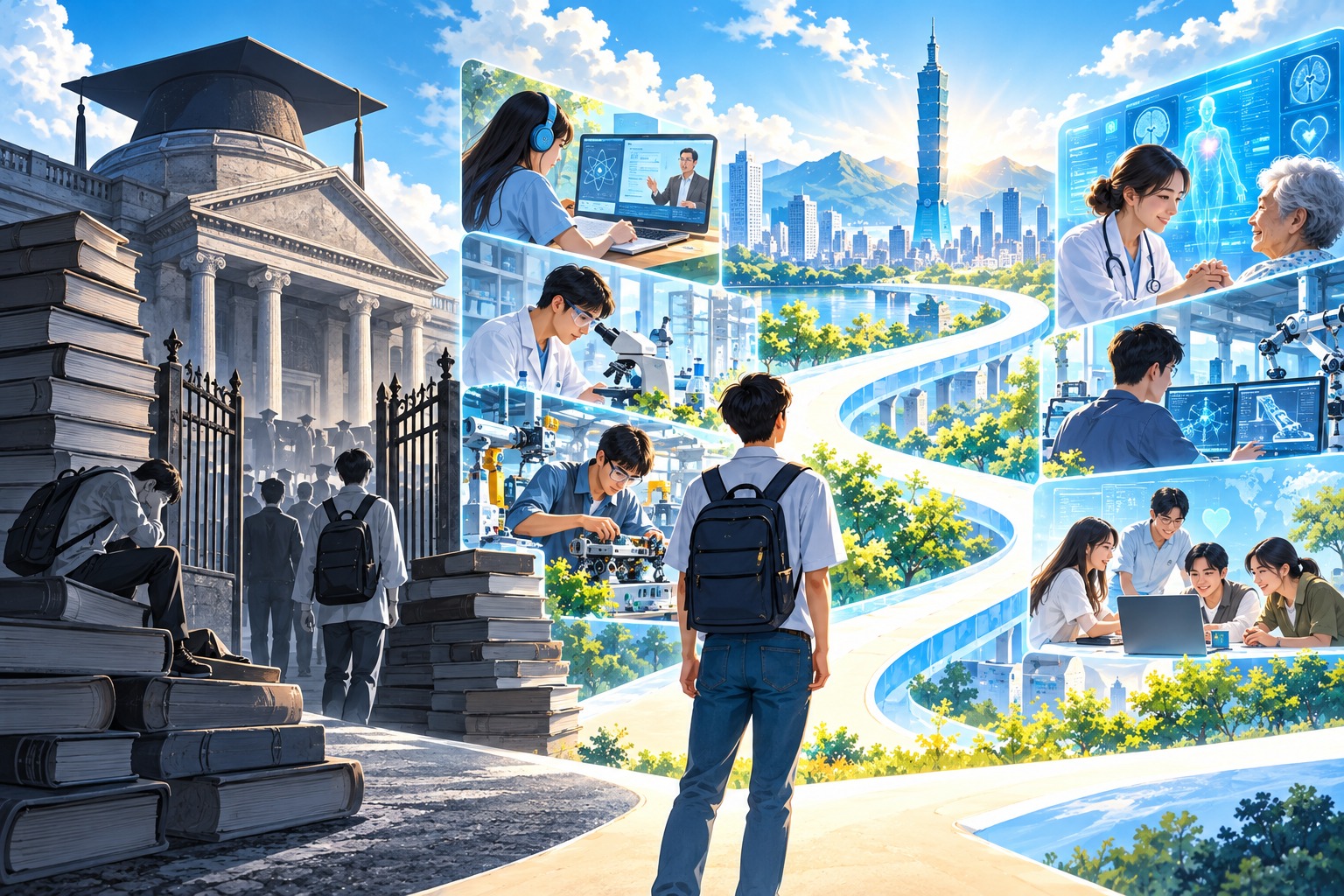
For thousands of years, the scholar-official mentality has held Chinese society back. It is time to wake from the old dream that 'books hold houses of gold and beautiful companions.' Before the mid-twentieth century, industry was less developed and career choices were limited; earning a university degree and entering government service seemed an ideal path. But scientific and technological advances have shown that knowledge benefits society most when applied to manufacturing and commerce. The closed university ivory tower is no longer the sole source of ideas that change the world; universities have become diploma factories. A diploma is not the source of confidence, and academic credentials do not determine your worth.
Distorted social values have produced fierce battles over allegations of plagiarism in academic theses. Some defend themselves with implausible explanations or lies; some assume everyone else is equally guilty; others mock themselves, remain indifferent to criticism, or prepare to have their degrees revoked. Still others keep silent to avoid attention or dismiss accusations as 'political manipulation.' These highly credentialed—but not necessarily knowledgeable—people reveal, intentionally or not, arrogance and vanity that may conceal insecurity and weakness.
Years ago, I was chatting with several professors and was astonished by the narrowness of their knowledge and how disconnected their social judgments were from reality. When I privately commented on a business owner, one professor remarked that the owner's honorary doctorate was not a genuine degree. I found that absurd. Although I did not admire the owner's public image, running a company requires constant learning, listening, reflection, management and problem-solving so that it survives and continues paying taxes. That experience, to me, deserved five doctorates.
The world we inhabit is dynamic and full of challenges. What is accepted today may be obsolete tomorrow. As one Harvard Business School professor reportedly remarked, an MBA earned years earlier should be considered expired. An excessive emphasis on diplomas has left vocational education neglected, factories short of skilled workers, and few people willing to pursue technical training. Some graduates cannot find suitable work, become financially dependent on their parents, or blame society rather than accept responsibility. Such unhappy, frustrated lives eventually become a burden on society.
With the rise and spread of the internet, we must reconsider the coming transformation of knowledge transfer, education and employment. My proposals are as follows:
- Shorten basic education from elementary through high school, including school-based social learning, to eight years of compulsory education.
- Replace conventional university education with online learning, supplemented by hands-on work, experiments, clinical practice and factory training. Today's computers provide sound and images as clear as classroom lectures and blackboards. Questions and challenges can receive hundreds or thousands of answers, discussions and interactions. Instructional videos can reach vast audiences, be copied and replayed, and be edited to select the best material and teaching methods. With teaching exposed to public scrutiny and competition, the author expects that more than 90 percent of today's university professors would be unable to maintain their positions.
- Establish or upgrade laboratories and clinical institutions for experiments in biochemistry and clinical training in medicine and nursing.
- Establish or upgrade training factories where students of electrical, mechanical and related fields can observe, operate equipment and test what they have learned. Combine these facilities with internships and contracted training at manufacturers. Using companies' accumulated experience and expensive automated equipment would greatly reduce government expenditure.
- Establish or modernize mission-oriented research institutions, such as the National Chung-Shan Institute of Science and Technology and Academia Sinica, to develop vaccines against viruses, strategic weapons, and the hardware and software needed to keep networks operating and defend against cyberattacks. These costly projects would support accurate responses to hostile threats. Their results should be national intellectual property; private individuals and participating researchers must be prohibited from colluding with companies to profit from that property at the nation's expense.
These five proposals could, in my view, replace today's university system. Learners could study subjects they enjoy at their own pace, regardless of time or location. Rigorous online competency examinations designed to prevent plagiarism and cheating, combined with evaluations of practical training hours, could prepare people for medicine, law, engineering, business, the humanities, languages and other professions. Once employed, they would continue refining their abilities through experience and open competition.
Educational transformation would also reshape employment. Freed from the constraints of largely symbolic credentials, employers could specify the knowledge, online courses and evaluated practical experience needed for each position. Learning would then match work, and society would make better use of everyone's talents.
I know reform will encounter ridicule and obstruction, mild or fierce, from vested interests. I nevertheless hope the government will pursue its ideals courageously. Above all, I hope my criticism of the present education system sparks a broader, more constructive and comprehensive public discussion. By drawing on diverse insights, Taiwan could become a small but outstanding and internationally respected nation before the middle of the twenty-first century.